
If you search for the best smart home devices for Airbnb, most guides give you the same list: a smart lock, a thermostat, maybe a doorbell camera and a noise monitor. Pick any four from column A, add them to your property, and you’re done.
The problem is that list was written for simplicity, not for reliability at scale. The best smart home devices for Airbnb in 2026 aren’t just the ones with the highest Amazon ratings — they’re the ones that hold up after hundreds of guest check-ins, work without your Wi-Fi going down, and don’t require you to manually intervene before every stay.
This guide covers every major device category with specific recommendations, explains what to avoid and why, and — critically — explains how these devices work together as a system rather than as isolated gadgets. A lock that doesn’t know your booking calendar is still a manual process. A thermostat that doesn’t reset between guests wastes money and generates complaints. The difference between a smart home setup that saves you time and one that creates more work is almost always the same thing: booking-aware automation.
For the full picture on how automation fits together, see our Ultimate Guide to Short-Term Rental Automation.
At‑a‑Glance: Our Recommended Stack
- Smart lock: Yale Assure Lock 2 (reliable, PIN‑first UX; Z-Wave option).
- Water damage prevention: Zooz Titan Water valve, motorized main water shutoff
- Smart thermostat: ecobee Smart Thermostat Essential with temperature limits.
- Lighting: Eve Energy Smart Switch, or other hard‑wired smart switches/dimmers for heated floors & guest‑facing circuits (avoid bulb‑only setups).
- Doorbell camera (policy‑safe): UniFi Doorbell Pro one camera at the entry-point, clearly disclosed in the listing/docs.
- *Optional* Streaming/TV: Google TV Streamer, simple remote, label inputs and leave an HDMI cable accessible.
Why this works: It’s guest‑proof, minimizes support calls, and pairs with RHA’s calendar‑aware automations: codes live only during the reservation window, HVAC runs on a smart schedule, water turns off at checkout, and lights behave predictably.
How We Evaluate Smart Home Devices for Airbnb
Most smart home device reviews evaluate products the way a homeowner would. For short-term rentals, the criteria are fundamentally different. The best Airbnb smart home devices score well on all four of these:
Reliability under heavy use. A residential smart lock gets used 5-10 times a day. An Airbnb lock at a busy property gets used 20-30 times on turnover days, by people of all ages, with varying levels of patience for tech that doesn’t work immediately. Devices that perform flawlessly for homeowners frequently fail in STR conditions.
Guest-proof design. Anything that requires an app, a Bluetooth connection, or a specific phone model will generate support calls. Wall switches, physical keypads, and standard interfaces survive guest interactions far better than clever tech that only works under ideal conditions.
Protocol independence from guest Wi-Fi. Your guests are using your internet. A smart device that depends on that same Wi-Fi connection — for its core function, not just remote access — is a reliability liability. This is why Z-Wave and Thread devices significantly outperform Wi-Fi devices in STR environments.
Automation compatibility. The best Airbnb smart home devices are ones that can respond to your booking calendar automatically — not ones you have to configure manually before each stay. This is the difference between a setup that scales to multiple properties and one that keeps you in a daily admin loop.
All devices and categories below are evaluated against these criteria. See our full smart device reviews for detailed specs and test results on each product.
1. Smart Locks — The Foundation of Every STR Setup
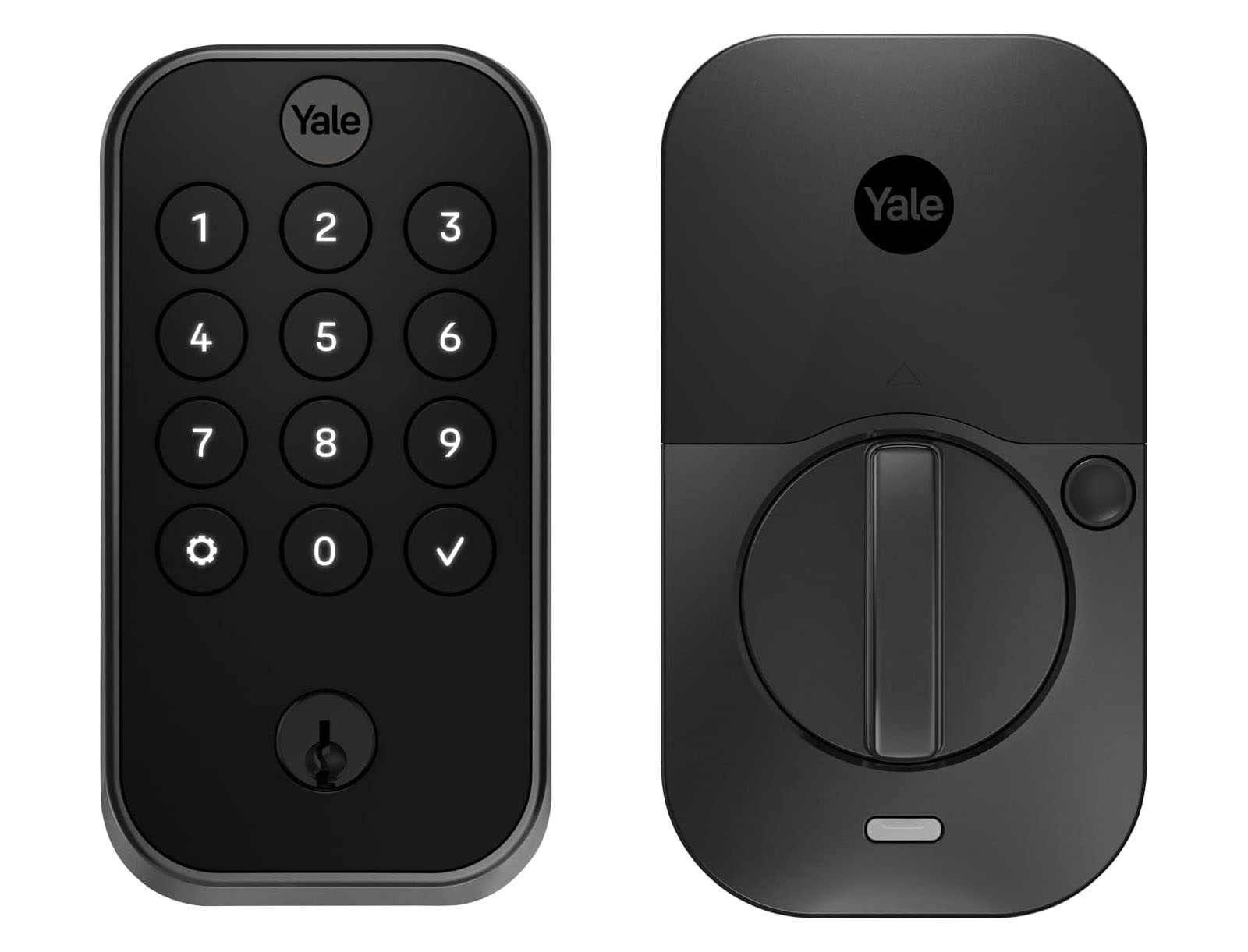
A smart lock is the single most important smart home device for any Airbnb. It enables self-check-in, eliminates physical key handoffs, and — when properly automated — creates and deletes guest codes automatically for every booking without any manual work.
What to look for in Airbnb smart home devices for access:
- Physical keypad with backlit buttons — guests of all ages and tech comfort levels need to get in reliably
- Multi-code support (100+ codes minimum for busy properties)
- Z-Wave protocol for battery life and automation reliability
- Physical key backup for genuine lockout situations
The Yale Assure Lock 2 is the best smart home device for Airbnb access control available in 2026. It delivers 12+ months of battery life under STR conditions (vs. 3-6 months for comparable Wi-Fi locks), supports 250 unique access codes, and integrates with every major Z-Wave automation platform.
What to avoid: App-only locks, Bluetooth-only locks, and fingerprint locks all fail predictably in STR contexts. Bluetooth has a 30-foot range — useless for remote management. App-only locks require guests to download software. Fingerprint readers are sensitive to dirt, moisture, and temperature and generate a disproportionate share of guest lockout calls.
The automation angle: A smart lock is only as good as the system managing its codes. Without calendar-connected automation, someone still has to manually create a code before every check-in and delete it after every checkout. At one property this is manageable. At two or three it becomes a real operational burden.
For a full breakdown of every lock protocol and why Z-Wave still outperforms Wi-Fi and Matter for STR use, see our guide to the best smart lock for Airbnb in 2026.
2. Smart Water Shutoff + Leak Sensors — Your Highest-ROI Upgrade
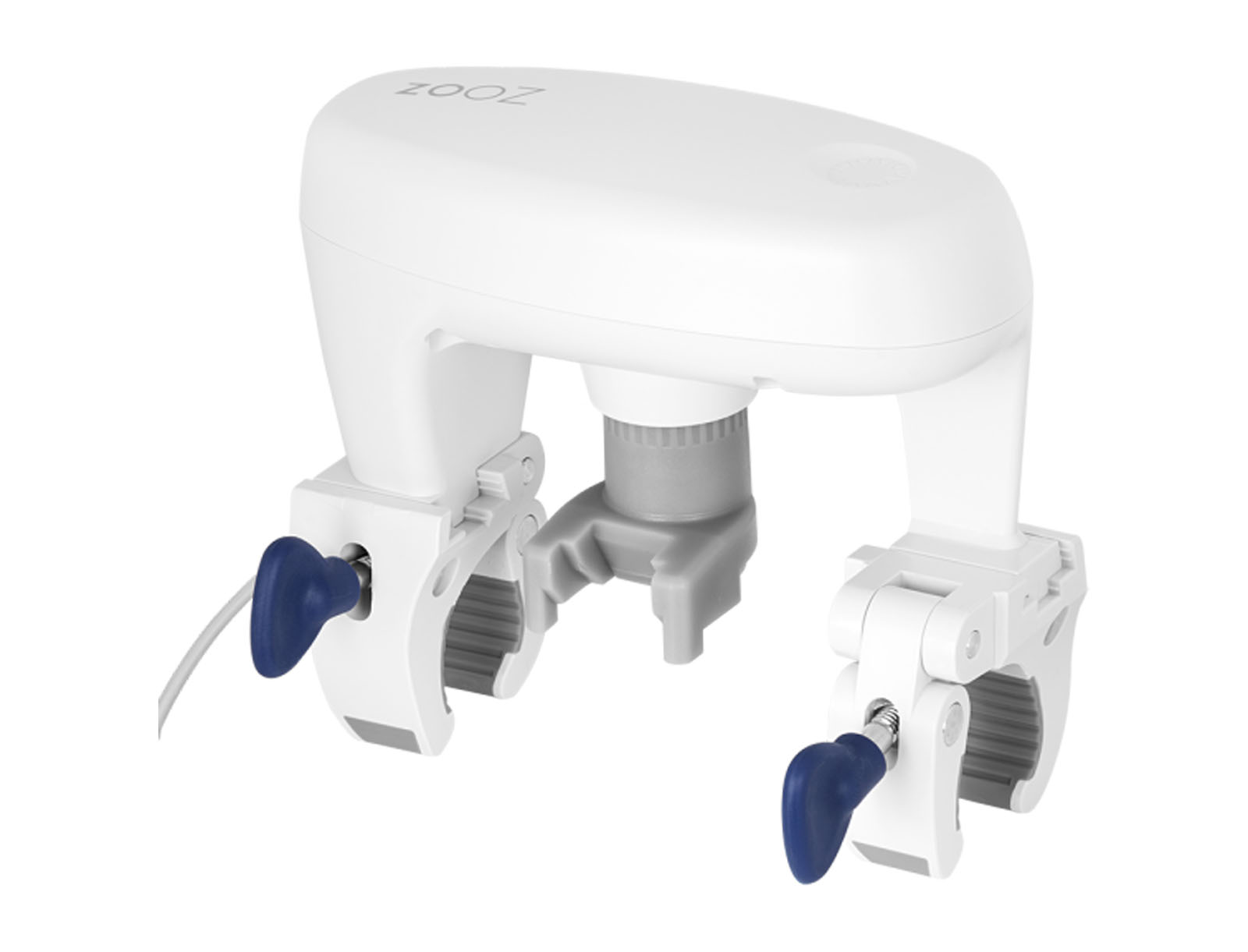
Water damage is the most expensive avoidable disaster in a short-term rental. Most hosts think about locks and thermostats when they think about smart home devices for Airbnb setups. Water protection is almost always an afterthought — until it isn’t.
The math is straightforward: a motorized main shutoff valve costs $150-300. A single water damage claim at an STR averages $10,000-50,000. The valve pays for itself the first time it prevents a burst pipe or supply line failure from running undetected for three days while the property is vacant.
The STR-specific risk pattern:
Water disasters at short-term rentals happen overwhelmingly when properties are vacant between stays. Nobody’s home to notice the supply line under the sink that started dripping. The water runs for 72 hours over a long vacancy. By the time you find out, the hardwood floors are warped, the drywall is wet, and the unit below has water stains on the ceiling.
The solution is simple: shut the water off automatically at checkout, turn it back on at check-in. No leak sensor required to trigger an automatic shutoff — just booking-calendar-aware automation running the valve on your reservation schedule.
What to install:
- Zooz Titan Water Valve (Z-Wave) on the main water supply line — motorized, Z-Wave, built for 24/7 operation
- Leak sensors in the highest-risk locations (under sinks, near water heaters, near washing machines) for alert-based monitoring
Important note on leak sensor automation: We don’t recommend configuring leak sensors to automatically shut the water off when they trigger. Here’s why: automatic shutoffs during a stay can cut water to guests who are showering or cooking — a terrible guest experience and a likely 1-star review. Use sensors for alerts, use calendar-based automation for shutoff scheduling.
For the complete water protection strategy, see our guide on water valve automation for short-term rentals.
3. Smart Thermostats — Comfort + Cost Control

A smart thermostat is one of the best smart home devices for Airbnb energy management — when it’s set up correctly. The key word is “correctly.” A thermostat that lets guests run the heat at 85°F in July costs money. A thermostat that drops to 55°F while guests are sleeping generates complaints and bad reviews. The setup matters as much as the device.
What to look for in Airbnb smart thermostat devices:
- Remote access for adjustment without being on-site
- Temperature limits (min/max bounds guests can’t override)
- Reliable scheduling for pre-conditioning before arrival
- Works with your automation platform for booking-calendar integration
Top pick: ecobee Smart Thermostat Essential
The ecobee Essential is our top pick for most STR properties. It supports temperature limits natively, integrates with SmartThings and most major automation platforms, has a clear touchscreen interface guests can actually use, and doesn’t require a cloud subscription for core functionality. ecobee’s own thermostat comparison is a useful reference if you’re deciding between their product tiers.
What to avoid: Nest thermostats are not recommended for short-term rentals. The Nest’s “learning” algorithm adapts to occupancy patterns — which works well in a home with consistent residents, and generates erratic behavior in a property with a different guest every few days. The ecobee’s schedule-and-limits approach is far more appropriate for STR use.
For detailed thermostat guidance including how to prevent guests from overriding temperature settings, see our article on the best smart thermostat for Airbnb and our guide on restricting thermostat changes.
4. Smart Light Switches — Guest-Proof Lighting That Actually Works

Smart bulbs are the most common lighting mistake hosts make. They’re cheap, they’re easy to install, and they stop working reliably the moment a guest physically turns off the wall switch — which guests always do, because that’s what wall switches are for.
The right approach to smart home devices for Airbnb lighting:
Replace wall switches and circuits with smart switches, not smart bulbs. When the switch is smart, the wall switch still works normally for guests while you retain remote control and automation capability. Smart bulb setups require guests to never use the physical switch — an expectation that consistently fails in practice.
Top picks:
- Eve Energy Light Switch — Thread protocol, guest-proof wall switch for main circuits
- Eve Energy Smart Plug — Thread protocol, ideal for lamps, floor fans, and plug-in heated floor mats
What works well with automation:
Porch lights, pathway lights, and exterior lighting respond extremely well to sunset-based and booking-calendar-based automation. Interior lighting tied to check-in/checkout times (welcome lighting on arrival, full reset at checkout) is one of the better guest experience touches that takes about 10 minutes to configure once you have the right switches.
Heated floors are a particularly good candidate for smart plug automation. Plug-in heated floor mats can be controlled via the Eve Energy Smart Plug — set them to run during morning hours of a guest stay and shut off at checkout, so guests enjoy the benefit without the energy waste of leaving them on between reservations.
For a full guide to lighting strategy at STRs, see our article on lighting automation for short-term rentals.
5. Smart Smoke and CO Detectors — Optional Smart Home Devices for Airbnb Hosts

Every Airbnb host is required to have smoke and CO detectors. The question is whether to make them smart — and this is one category where we urge caution before recommending specific products.
Most jurisdictions require hardwired, interconnected smoke detectors that meet local building codes. The problem is that the smart smoke detector market hasn’t produced a device that reliably satisfies both requirements simultaneously: hardwired, building-code-compliant interconnectivity AND useful Z-Wave or Thread integration for remote alerting. Products that do one tend to compromise on the other.
Our recommendation:
Start with code-compliant hardwired detectors that meet your local requirements. Don’t compromise on building code compliance in pursuit of smart features. If remote alerting is a priority, the Ecolink Z-Wave Wireless Audio Detector is an interesting workaround — it listens for the sound of your existing alarm chirping and sends a Z-Wave alert when it detects one, without replacing the detector itself.
Smart smoke integration is worth revisiting as the category matures. For now treat it as optional, and prioritize building-code-compliant hardware first.
For more on this topic, see our full article on making smoke detectors smart at your STR.
6. Network and Connectivity — The Infrastructure Everything Depends On
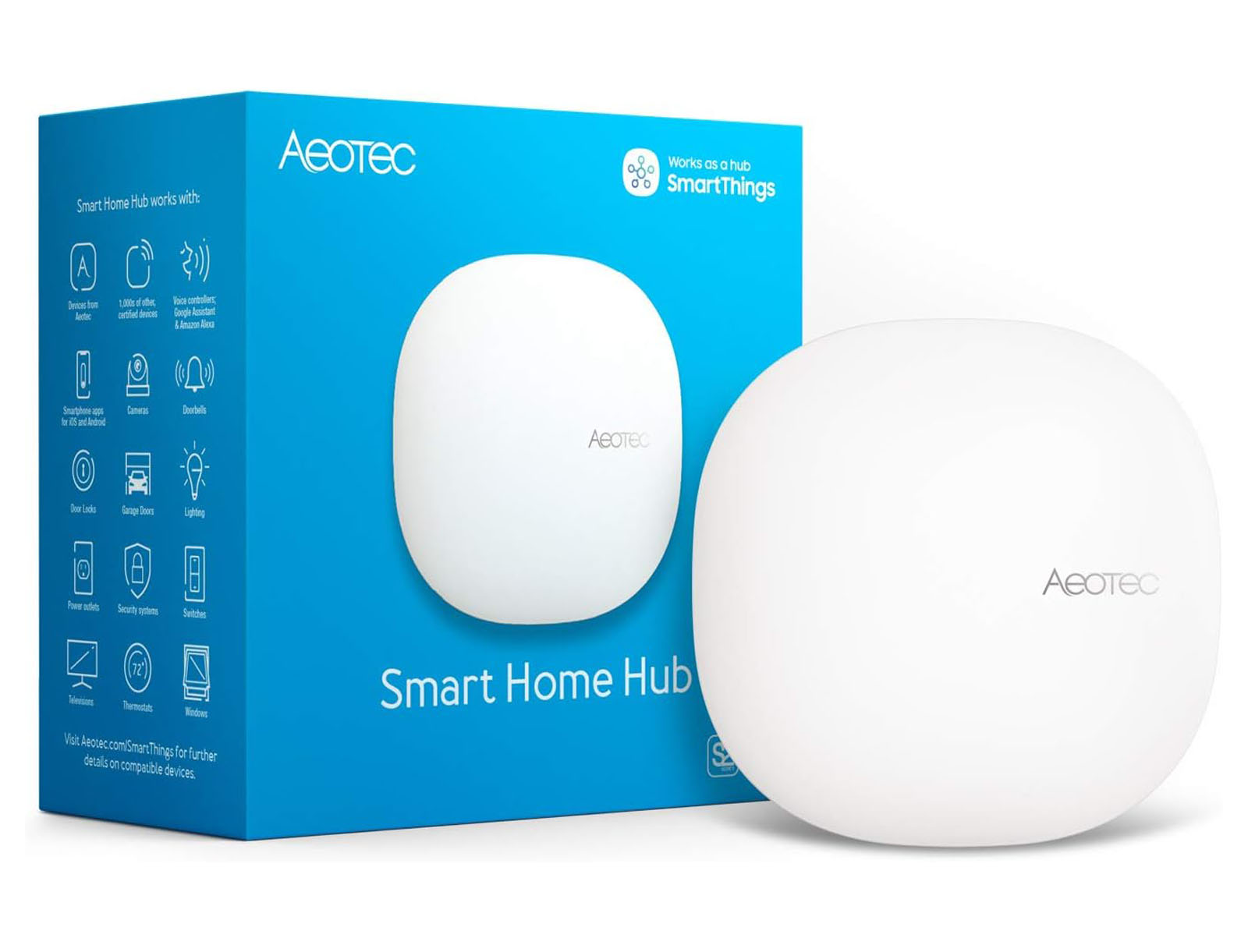
This category doesn’t get enough attention in best smart home devices for Airbnb guides, but it’s the infrastructure that everything else depends on. A Z-Wave lock that can’t reach its hub because the hub is offline serves no one. A thermostat that can’t be accessed remotely because the router rebooted is useless at 11pm on a Saturday.
The core networking principles for STR smart home setups:
- Smart devices should not share the guest Wi-Fi network — use a dedicated IoT VLAN or separate network segment
- Invest in business-grade networking hardware; consumer routers are not built for the traffic patterns of a busy STR
- A reliable hub (Aeotec SmartThings Gen 3) is the center of your Z-Wave ecosystem — treat it like infrastructure, not like a gadget
The UniFi ecosystem is our recommended networking infrastructure for serious STR operators. It provides the VLAN segmentation, traffic monitoring, and uptime reliability that consumer-grade routers can’t match — and it’s the reason Z-Wave devices continue operating even when guests are maxing out bandwidth on the guest network.
7. Outdoor Security Cameras — One Rule, No Exceptions
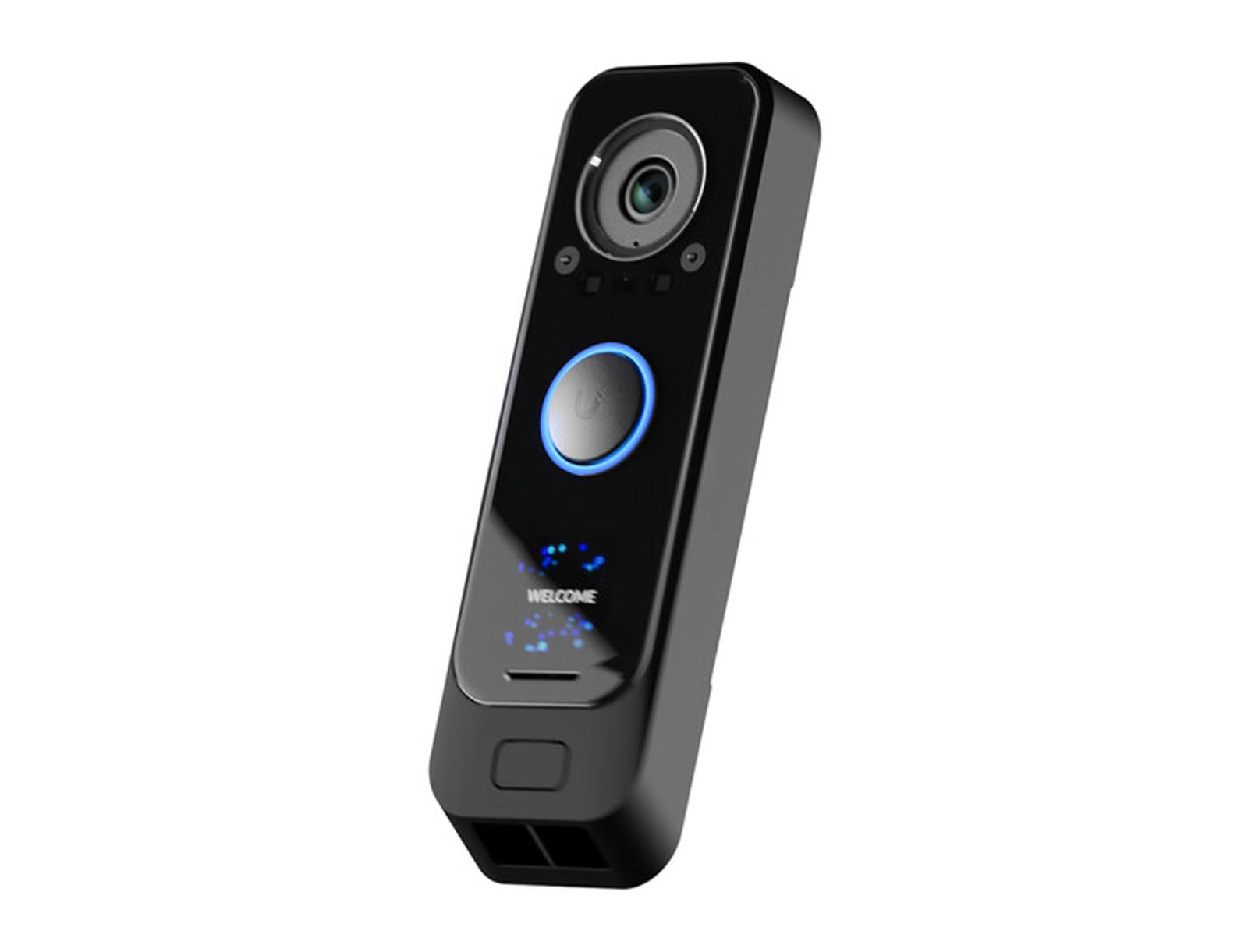
The rule for cameras — and for any smart home devices for Airbnb security — is simple: exterior only, always disclosed, never interior.
Airbnb explicitly prohibits indoor cameras regardless of location or prior disclosure. VRBO has the same policy. Beyond platform rules, indoor cameras expose hosts to significant civil and criminal liability in most states. This is not a gray area.
What works and is allowed:
A single doorbell camera at the main entry point covers the most important view — who arrives, when they arrive, and whether unauthorized guests are being brought in. The UniFi Doorbell Pro is our top pick for hosts already running UniFi networking. For hosts not on the UniFi ecosystem, the ecobee Smart Doorbell Camera integrates cleanly with the ecobee thermostat ecosystem.
Disclosure requirements:
All exterior cameras must be disclosed in your Airbnb listing description, your house manual, and wherever local law requires. Non-disclosed cameras violate Airbnb’s Terms of Service even when positioned legally on your property.
8. Noise Monitors — Useful but Often Misconfigured
Noise monitors are mentioned in almost every best smart home devices for Airbnb list, and they’re genuinely useful — with one important caveat about how they’re typically configured.
What noise monitors do:
They measure decibel levels continuously and alert you when noise exceeds a threshold you set. They do not record audio or video, which is a key privacy-compliance distinction. Minut is the category leader and is worth reviewing if this is a priority for your property.
The misconfiguration problem:
Most hosts set thresholds too low, resulting in constant false alerts from normal conversation, cooking sounds, or guests watching TV at normal volume. A noise monitor that pages you constantly becomes noise itself — you start ignoring it, which defeats the purpose.
Calibration guidance:
Set your threshold for genuine party-level noise (typically 80-90 dB sustained for 10+ minutes) rather than for any above-average sound. The goal is catching a party in progress, not knowing every time guests laugh loudly.
The Stack That Actually Works Together
Here’s the full recommended stack of smart home devices for Airbnb properties, organized by priority:
Recommended stack — essential devices
| Device | Protocol | Why it’s essential |
|---|---|---|
| Yale Assure Lock 2 (Z-Wave Plus) | Z-Wave | Best battery life, full automation, 250 codes |
| Zooz Titan Water Valve | Z-Wave | Vacation-mode shutoff, single highest-ROI upgrade |
| ecobee Smart Thermostat Essential | Wi-Fi/API | Temperature limits, calendar-aware scheduling |
| Eve Energy Light Switches | Thread | Guest-proof wall control, heated floor circuits |
| Eve Energy Smart Plug | Thread | Lamps, plug-in heated floors, appliance automation |
| UniFi Doorbell Pro | Local/Wi-Fi | Entry monitoring, Airbnb-compliant exterior camera |
| Leak sensors (3-5 locations) | Zigbee/Thread | Alert-based monitoring at highest-risk points |
Infrastructure — required to make the stack work
| Device | Protocol | Why it’s required |
|---|---|---|
| Aeotec SmartThings Hub Gen 3 | Z-Wave/Zigbee controller | Manages all Z-Wave and Zigbee devices; keeps smart devices off guest Wi-Fi |
| Quality router (UniFi recommended) | Ethernet/Wi-Fi | Reliable uptime; IoT VLAN to isolate smart devices from guests |
Optional devices — worth considering
| Device | Protocol | Notes |
|---|---|---|
| Google TV Streamer | Wi-Fi | Simple interface guests can actually use; reduces TV-related support calls |
| Noise monitor (Minut) | Wi-Fi | Party prevention; configure thresholds carefully to avoid false alerts |
| Smart smoke/CO audio detector | Z-Wave | Check building code requirements first — see section 5 above |
The Gap No Device List Addresses
Every list of the best smart home devices for Airbnb stops at the device. None of them address the operational question: who configures the lock codes before every check-in? Who makes sure the thermostat resets after checkout? Who turns the water back on when guests arrive and off when they leave?
With native Airbnb integrations, you get basic lock code sync for Airbnb bookings only. VRBO bookings, direct bookings, cleaner access, maintenance visits, and early/late checkout handling all fall through the gap back into manual work.
This is the problem Rental Home Automator was built to solve. RHA connects your booking calendar — across all platforms — directly to your devices. Lock codes are created and scheduled for each guest’s exact reservation window. The thermostat pre-conditions before arrival and goes to eco mode at checkout. The water valve turns on at check-in and off at checkout. All of it runs automatically, for every booking, on every platform, across every property you manage.
The devices are the hardware. RHA is the automation layer that makes them work as a system instead of as individual gadgets you’re still managing manually.
See how RHA connects your booking calendar to your devices →
View pricing →
Frequently Asked Questions
The five most important best smart home devices for Airbnb properties are: a Z-Wave smart lock (Yale Assure Lock 2), a motorized water shutoff valve (Zooz Titan), a smart thermostat with temperature limits (ecobee Essential), Z-Wave or Thread smart light switches, and a doorbell camera for the main entry. These five devices cover the four most important STR operational concerns: access, water damage, energy management, and guest safety.
No — and ideally they shouldn’t be. Smart devices on the same network as guests are subject to bandwidth congestion and potential security exposure. Z-Wave devices connect to a hub rather than directly to Wi-Fi, completely avoiding this issue. For Wi-Fi-based devices like thermostats and doorbells, configure them on a separate IoT network or VLAN isolated from the guest network.
Airbnb has direct integrations with several smart lock brands (Yale, August, Schlage) that allow automatic code generation when a guest books. This works for Airbnb bookings only and covers access control only — thermostats, water valves, lighting, and other devices are outside the native Airbnb automation scope. A platform like RHA extends calendar-based automation to all device types and all booking sources.
Generally no. Smart bulbs stop responding to automation when guests physically switch off the wall switch — which guests consistently do. Smart switches (which replace the wall switch itself) are far more reliable for STR use because the physical wall switch continues to work normally while the switch retains automation capability.
Most smart thermostats support configurable temperature limits that prevent guests from setting temperatures outside a defined range. The ecobee Essential allows you to set minimum and maximum temperature bounds through the app. Z-Wave thermostats integrated with SmartThings or RHA can have these limits enforced at the automation level as well. See our full guide on restricting thermostat changes at your STR.
Stop Configuring Devices Manually Before Every Stay
You’ve built your Airbnb with the best smart home devices for Airbnb hosts. Now the question is whether you’re spending time on manual setup before every check-in — or whether your entire stack works automatically.
Rental Home Automator connects your booking calendar across Airbnb, VRBO, and direct bookings to every device in your property. Lock codes generate and expire on reservation time. Thermostat schedules adjust automatically for arrival and departure. Water valve turns on at check-in, off at checkout. All of it runs without manual intervention, for every booking, across every property you manage.
For individual device deep-dives, browse our full library of smart device reviews and recommendations.
)
&description=&image=https://www.rentalhomeautomator.com/wp-content/uploads/hosting_rentalhomeautomator_com_files/2024/11/jens-kreuter-ngMtsE5r9eI-unsplash.jpg)